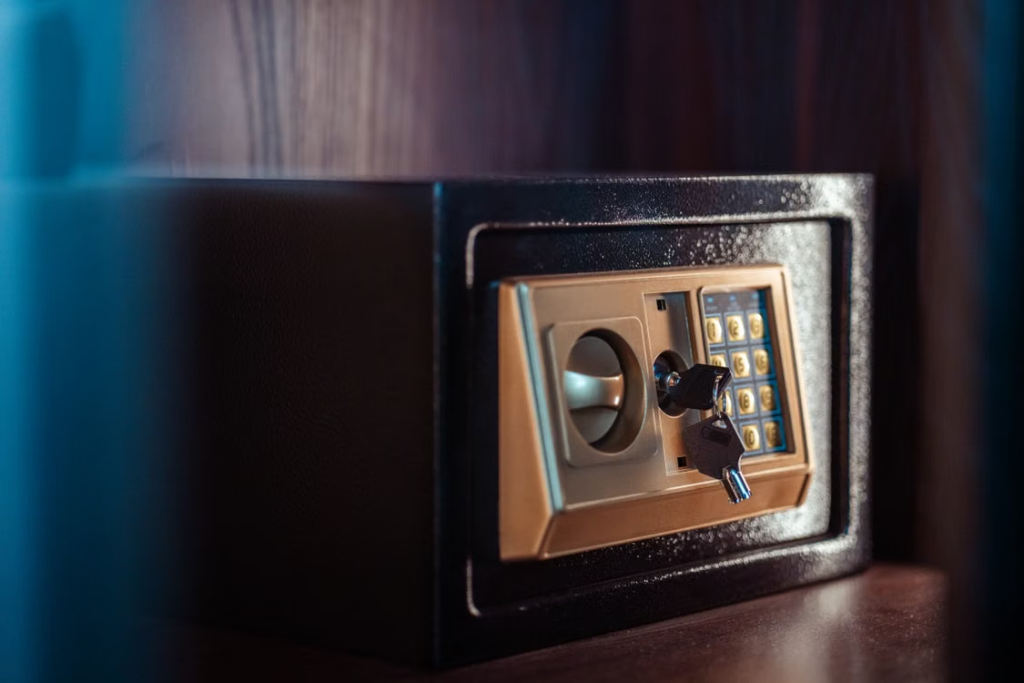
Buying a safe feels like it should be simple. Pick a metal box, put your stuff in it, sleep better.
Then you start shopping and you’re hit with cash ratings, fire ratings, gauges, grades and a price range from $150 to $15,000. It’s a lot.
Here’s the short version: a safe is only as good as the job you’re asking it to do. Below is how to work that out, without needing a security degree.
Write a quick list. Cash? Passports and the title deed? Jewellery with sentimental value? A hard drive with your business records? Medication? A licensed firearm?
That list decides everything else, because different threats need different boxes.
This is the part most people get wrong. A fire rating tells you how long paper survives a house fire. It tells you nothing about how long the safe survives a crowbar. They’re two separate tests measuring two separate things.
A cash rating is the dollar value an insurer will generally cover inside that safe. Ratings commonly run from around $5,000 up to $500,000 for high-end commercial units.
In Australia, the benchmark standard is AS/NZS 3809:1998, which tests how well a safe resists attack with real tools. A genuinely rated safe carries a certification plate, usually inside the door, referencing the standard.
Two things worth knowing:
Do this before you buy: ring your insurer and ask what cash rating they require for the amount you want covered. Five minutes on the phone now beats a declined claim later.
Fire ratings are measured in time — commonly 30 minutes, 60 minutes or 120 minutes — and they’re tied to what’s inside. Paper chars at a much higher temperature than a USB stick or a hard drive melts. So a safe rated to protect documents will not necessarily protect digital media.
If you’re storing drives, backup discs or film, look for a safe specifically rated for data or media.
Everyone underestimates. Nearly every safe owner we meet has run out of room within two years.
A few practical tips:
Here’s the uncomfortable truth: most safes aren’t broken into. They’re carried out.
Two people and a trolley can remove a 60kg safe from a townhouse in under a minute, then open it later in private with all the time in the world.
So:
This is where a safe locksmith earns their fee. We work out where the safe can go, what’s behind the wall, and how to fix it properly without cracking a slab or hitting a pipe.
At home, the priorities are usually fire protection, discretion and a spot that isn’t the master bedroom wardrobe. This is often the first place any burglar looks. Wall and floor safes work well because they hide.
At the office or shop, think about who needs access and how often. A drop safe or deposit safe lets staff post cash through a slot without opening the main compartment. Multiple user codes and an audit trail help you see who opened it and when. If takings sit on site overnight, cash rating matters more than fire rating.
NSW has specific storage rules under the Firearms Act, and they change depending on your firearm category. In general, safes must be commercially made, not easily penetrable, anchored if they’re under 150kg, and ammunition must be stored separately.
Requirements are updated from time to time and inspections do happen, so check the current safe storage fact sheets from the NSW Police Firearms Registry before buying. We’re happy to install and anchor a compliant gun safe once you know which level applies to you.
At All Time Locksmiths, we’ve installed safes in Sydney homes and businesses for over 35 years: in terraces in Newtown, offices in the CBD, shops in Bankstown and family homes out in the Hills.
We’ll look at your space, what you’re storing and what your insurer expects, then recommend something that fits all three. No upselling to a vault you don’t need.
Call 1300 705 307 for advice or a quote.